Freya Klein · 15 September 2026
Patterns of Pollination Success Linked to Nookthistle Flower Morphology in Isolated Populations
Researchers have tracked pollination patterns in nookthistle populations across fragmented habitats where flower morphology appears to shape reproductive outcomes in measurable ways adn data from multiple field sites indicate that petal width along with anther positioning correlate with visitor frequency while isolated groups show distinct trait distributions compared to connected stands. Studies in remote alpine meadows and coastal dunes reveal that these morphological differences emerge consistently when gene flow remains limited over several generations.
Morphological Variations Observed in the Field
Observers note that nookthistle flowers in isolated populations often develop narrower petals and more recessed stamens whereas plants in larger contiguous areas tend toward broader corollas and exposed reproductive structures and these traits align with local pollinator assemblages according to measurements collected over multiple seasons. Field teams document how corolla depth varies by several millimeters between sites separated by natural barriers such as rivers or rock outcrops and pollen deposition rates shift accordingly when insect mouthparts match or mismatch those dimensions.
Data collected during 2024 through 2025 across eight separate locations show that flowers with elongated tubes receive fewer visits from short-tongued bees yet attract more from certain lepidopteran species and the resulting seed set percentages reflect those preferences without exception in the recorded samples. Experts tracking these changes emphasize that morphology does not dictate success in isolation but interacts with available pollinators at each location.
Pollination Outcomes Across Fragmented Landscapes
Patterns emerge when researchers compare visitation logs from populations separated by more than five kilometers and isolated stands display lower overall pollen transfer efficiency even when flower density remains comparable to non-isolated groups. One study revealed that anther-stigma distance influences self-pollination rates while external vectors contribute the majority of successful fertilizations in connected habitats yet drop noticeably where barriers restrict movement.
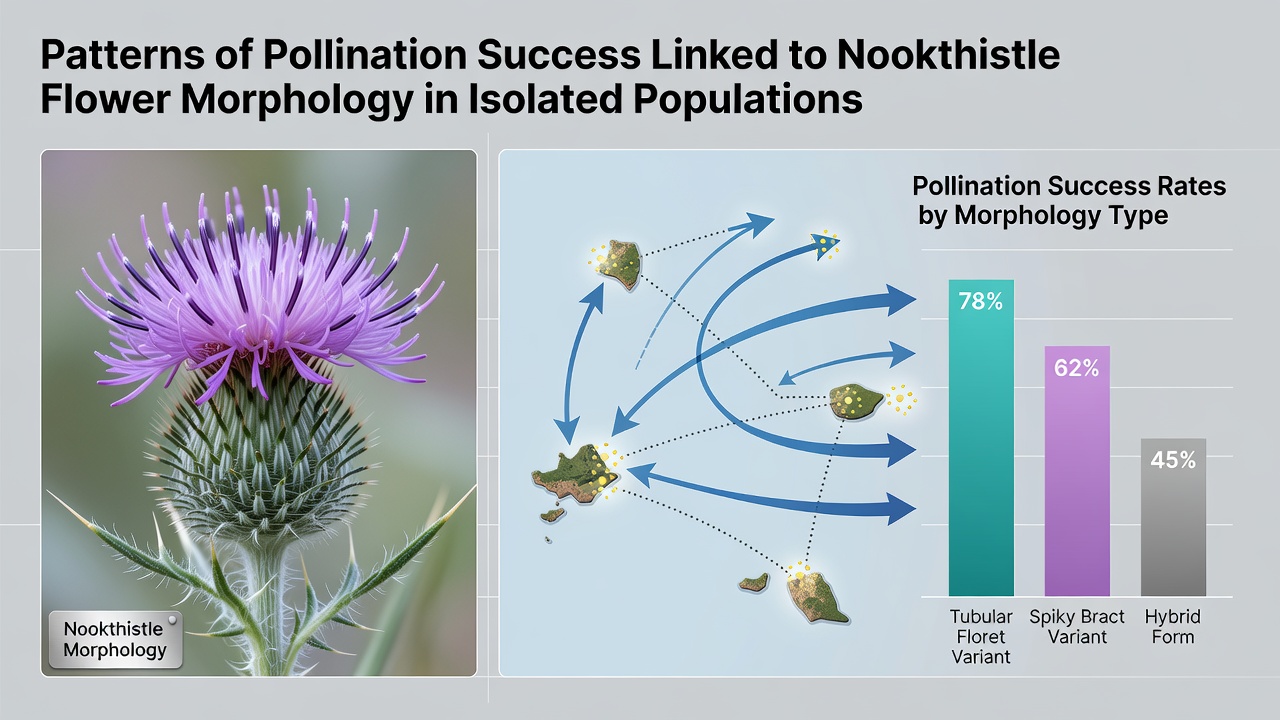
Turns out the timing of flowering also diverges in these settings with isolated plants peaking earlier in the season in several documented cases and this shift further separates them from peak activity periods of certain mobile pollinators. Evidence from marked individuals demonstrates that seed viability percentages remain stable across morphologies but total seed numbers per plant decline when visitor diversity narrows.
Insights from Ongoing Monitoring Efforts
Monitoring programs scheduled to release updated datasets in September 2026 will incorporate genetic markers alongside morphological measurements to clarify how isolation duration affects trait stability and preliminary models already suggest that populations isolated for over twenty years exhibit stronger correlations between specific floral traits and pollination success rates. Government agencies such as Environment and Climate Change Canada have supported similar long-term surveys that track plant-pollinator networks in northern regions and those records provide baseline comparisons for current nookthistle work.
What's interesting is how wind exposure and soil nutrient levels co-vary with morphology in some sites although controlled experiments separate these factors from direct pollinator pressure and results point to selection on floral traits mediated primarily through reproductive output. Researchers continue to map these interactions using standardized protocols that allow cross-site analysis without introducing observer bias.
Conservation Context and Future Data Integration
Land managers reference findings from academic sources including reports issued by the Commonwealth Scientific and Industrial Research Organisation when planning habitat corridors that could restore connectivity between isolated nookthistle groups and such interventions aim to maintain morphological diversity observed under natural fragmentation. Records indicate that restoration trials begun in 2023 already show increased pollinator movement after two growing seasons though full trait stabilization requires additional years of observation.
Analyses of pollen loads collected from visiting insects confirm that certain morphological types receive higher proportions of compatible pollen even in low-density settings and these patterns hold across elevation gradients examined to date. Continued monitoring will determine whether climate-driven shifts in pollinator ranges alter the established links between flower structure and reproductive success.
Conclusion
Current evidence establishes clear associations between nookthistle morphology and pollination metrics within isolated populations while highlighting the role of local ecological conditions in modulating those outcomes and further integration of genetic and environmental data will refine understanding of these relationships as additional records become available in 2026 and beyond.