Drew Keller · 10 November 2026
Thistle Species Contributions to Seed Bank Longevity During Farmland Restoration Efforts
Thistle species maintain seed viability in soil profiles for extended periods, and this trait supports farmland restoration projects across multiple continents. Researchers have documented how certain Cirsium and Carduus varieties contribute to persistent seed banks that remain functional even after decades of conventional agriculture. Data from long-term monitoring sites show that thistle seeds can retain germination capacity for 20 to 50 years under suitable burial conditions, which helps reestablish native plant communities once tillage and chemical inputs cease.
Seed Persistence Mechanisms in Thistle Populations
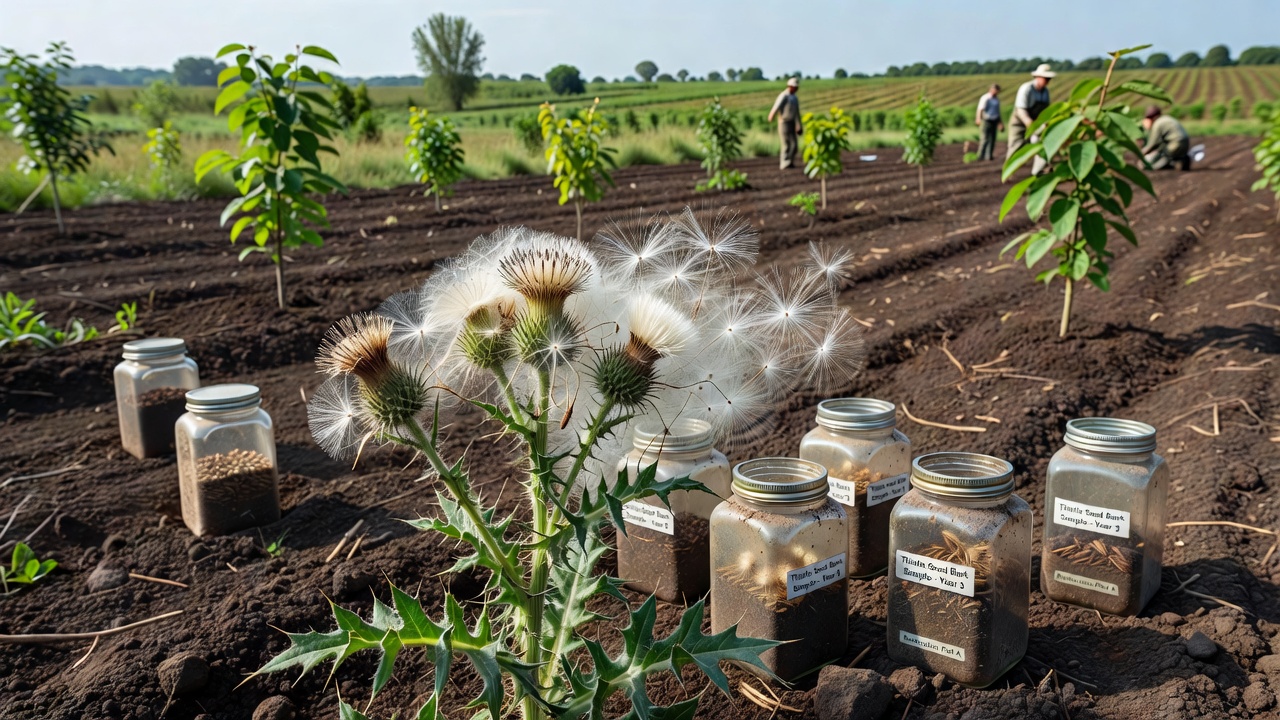
Thistle achenes develop hard coats and physiological dormancy that protect embryos from microbial decay and oxidative stress. Studies conducted on restored prairie margins indicate that burial depth between 5 and 15 centimeters combined with moderate soil moisture extends longevity most effectively. In November 2026, updated datasets from North American restoration networks confirmed that thistle seed half-life averages 28 years in clay loam soils, whereas sandy substrates shorten that interval to roughly 12 years. These figures come from repeated germination trials rather than modeling alone.
Soil organic matter content also influences outcomes. Higher levels of humus slow seed aging by limiting temperature fluctuations and water movement. Observers note that thistle contributions become especially evident in fields that transitioned from row crops to perennial cover five or more years earlier. Seed bank assays at those locations regularly recover viable thistle propagules at densities exceeding 200 seeds per square meter in the top 10 centimeters.
Regional Case Examples and Monitoring Data
Restoration teams working on former wheat fields in the Northern Plains have recorded thistle recolonization patterns that align with seed bank longevity rather than recent dispersal events. Genetic analysis of emerging plants matched seed collections archived from the 1990s, demonstrating that dormant populations can reappear without new immigration. Similar patterns appear in Australian cereal zones where Carduus nutans seeds persisted through multiple drought cycles before germinating after grazing exclusion.
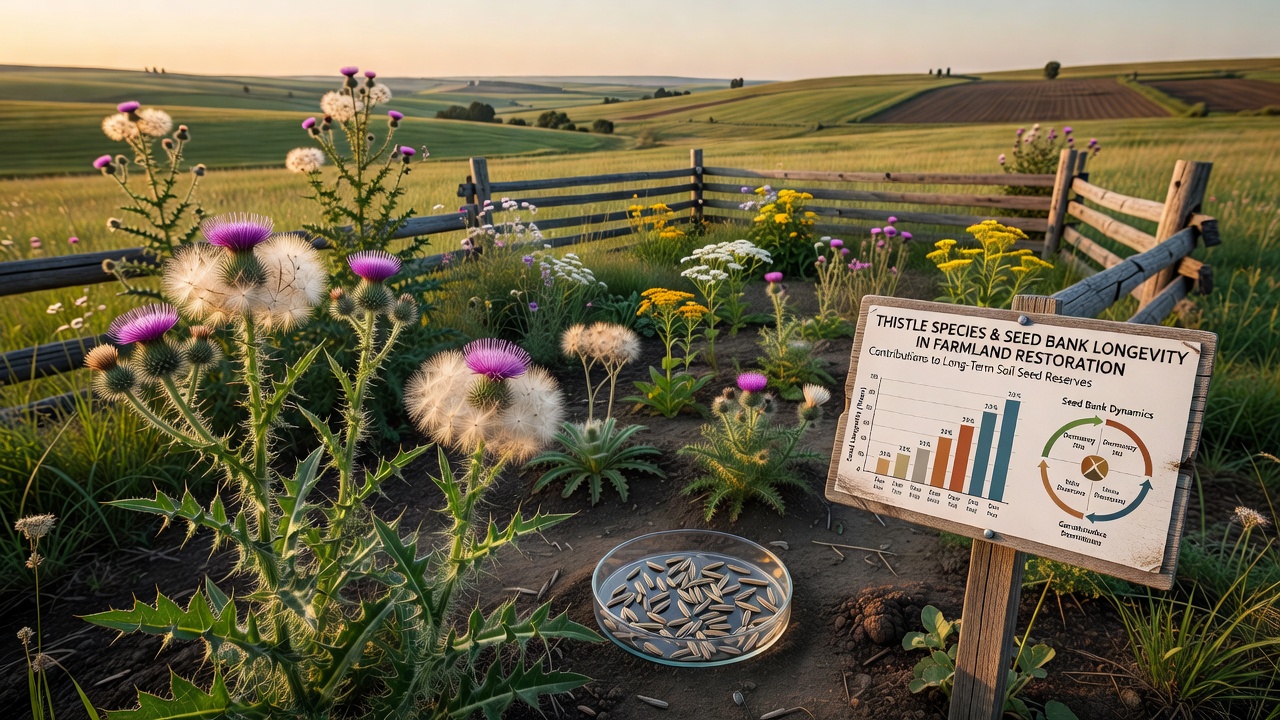
European monitoring programs funded through the Common Agricultural Policy have tracked thistle dynamics in set-aside parcels since the early 2000s. Results released in 2025 showed that fields with historic thistle presence achieved target species richness 18 months faster than comparable sites lacking such seed banks. The Australian Department of Climate Change, Energy, the Environment and Water published parallel findings from temperate grassland reconstructions, noting that thistle-assisted sites required fewer supplemental plantings to reach functional cover thresholds.
Interactions with Soil Biota and Disturbance Regimes
Thistle roots exude compounds that modulate microbial communities, which in turn affect seed coat degradation rates. Mycorrhizal associations common in regenerating meadows appear to shield nearby thistle seeds from pathogenic fungi. Data collected from Canadian prairie restoration plots indicate that fields managed with occasional light disturbance retain higher thistle seed densities than those left completely undisturbed, because periodic aeration prevents anaerobic conditions that accelerate seed mortality.
Yet excessive tillage reverses these benefits by bringing seeds to the surface where predation and desiccation increase. Managers therefore time mechanical interventions to coincide with periods when seed banks have already contributed new cohorts. This approach balances thistle longevity advantages against risks of unwanted dominance during early succession stages.
Implications for Future Restoration Planning
Seed bank mapping now informs site selection for farmland retirement programs in multiple jurisdictions. Agencies use historical crop records and soil cores to predict where thistle legacies will accelerate recovery. The USDA Forest Service research summary from 2024 outlines protocols that combine thistle seed bank assays with vegetation surveys to set realistic timelines for native species reestablishment.
Climate projections suggest that shifting precipitation patterns may further extend thistle seed persistence in some regions while shortening it in others. Ongoing trials in variable rainfall zones test whether cover crop choices can buffer these effects. Results accumulated through 2026 continue to highlight thistle species as reliable contributors to functional seed banks when restoration proceeds without intensive chemical suppression.
Conclusion
Thistle species extend the functional lifespan of seed banks in post-agricultural soils through dormancy traits, protective seed coats, and interactions with soil organisms. Monitoring programs across North America, Europe, and Australia document measurable gains in restoration speed and reduced replanting costs at sites where these legacies persist. Continued integration of seed bank assessment into planning frameworks allows practitioners to leverage thistle contributions while managing their abundance during active restoration phases.